Canvass the block while the chipper is still running, work a storm track before the phones stop ringing, and track every estimate, clawback and mile like a business.
Flat month-to-month from $30/mo · 14-day free trial · no seat minimums, no annual contract
Tree service is the rare door-to-door trade where the product is visible from the sidewalk. You do not have to explain a utility bill or a monitoring plan — you point at the dead ash, the hanger caught in the canopy, the codominant leader split down the middle, or the limb resting on the shingles, and the homeowner sees the same thing you do. That changes the whole sales motion. The hard part is not convincing anyone the tree is a problem; it is being at the door before the four other trucks working the neighborhood, remembering which of the sixty houses you already walked, and getting paid what you actually sold.
Most tree companies solve half of that with job-management software — the estimate, the work order, the crew calendar, the invoice — and then run the canvass itself on a clipboard, a group text and a memory. That is where the leads leak. FieldStacker takes the street: the map, the doors, the dispositions, the follow-ups and the rep's commission, and leaves the bid to the system built for it.
All of it works today, out of the box, no vertical setup detour.
Draw a territory around the street your crew is working, load every door inside it, and knock while the bucket is in the air behind you. Mobilization is already paid for — that on-site rate is real, and it closes.
Plan the block before you walk it. Drop color-coded pins on the trees worth stopping for, route the street so you are not doubling back past the same driveway, and keep the dead-ash streets flagged for the next pass.
When a wind, ice or hurricane band comes through, trace the damage footprint the same morning, assign the doors inside it, and get the crew canvassing while the competition is still returning voicemails.
Name your own stages — walked the tree, estimate left, waiting on permit, HOA approval, booked, produced, collected — so a street shows you its real status instead of "maybe."
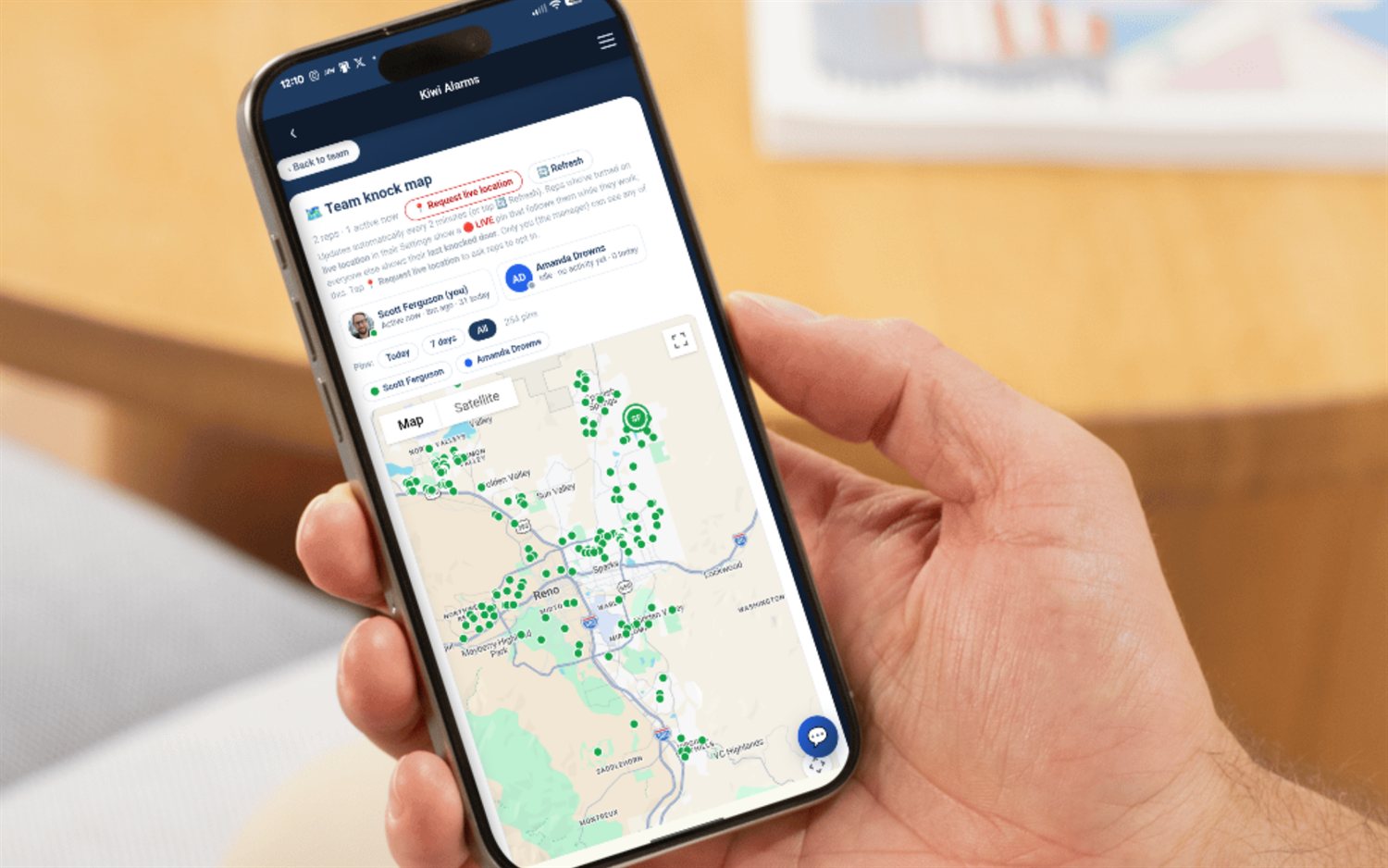
Every knock is stamped and attributed. Two reps stop double-covering the same cul-de-sac, and when a homeowner says "somebody already came by," you can see who, when, and what they said.
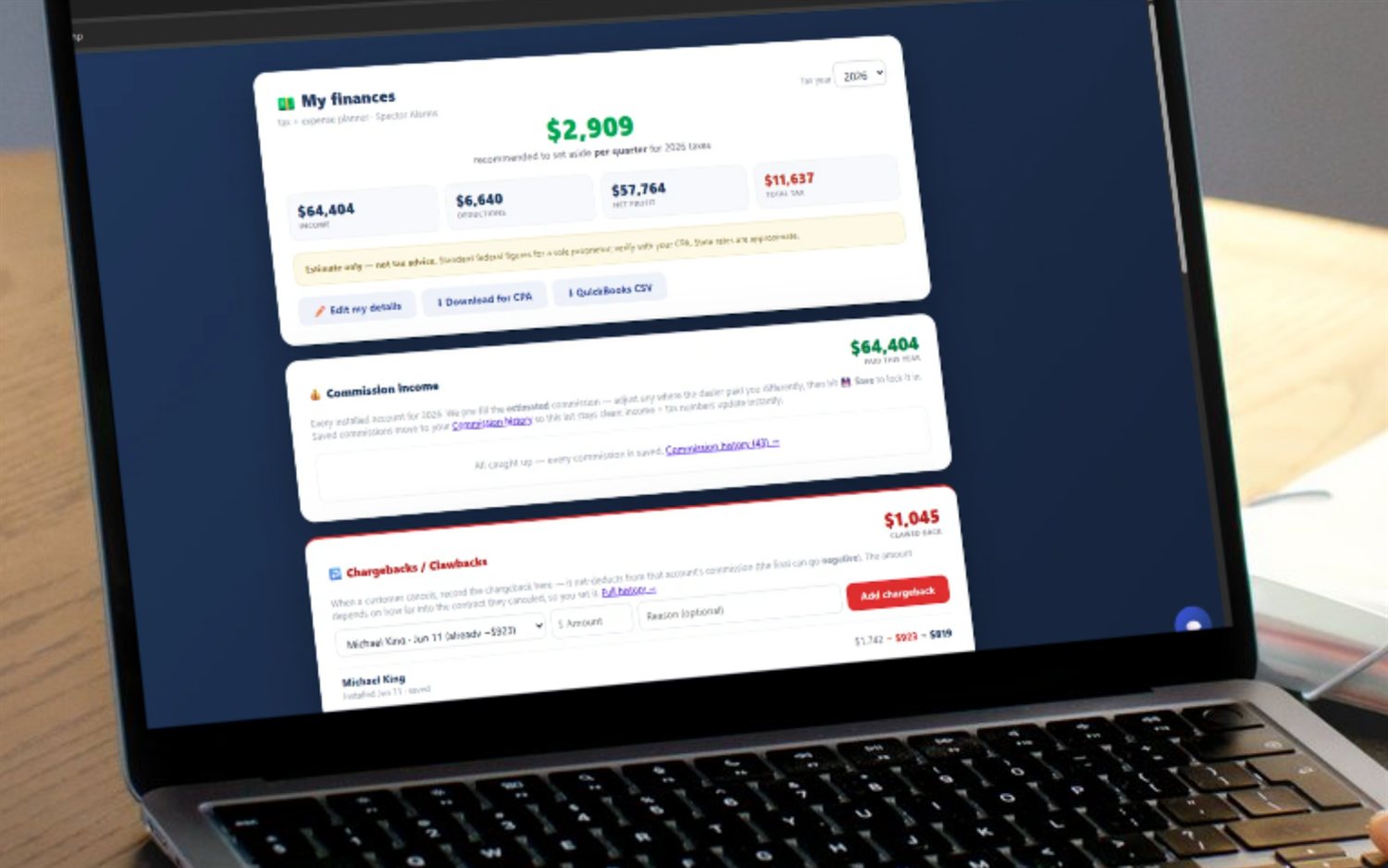
Your split on your own numbers, clawbacks netted against the total when a job overruns or an invoice never gets collected, automatic mileage at the IRS rate, and a quarterly 1099 set-aside.
Pricing a removal stays with the system built for it. Bidding tree work is a risk-and-hours calculation — canopy size, distance to the structure and the service drop, whether it is a clean drop zone or everything comes down on rigging, bucket versus climber versus crane, brush drag distance, disposal, and how many crew-hours the whole thing eats. The systems built for that are good at it. Use them.
Two tools, one clean seam. Nobody has to double-enter a job.
| The task | FieldStacker | Your tree software |
|---|---|---|
| Finding the next street worth knocking | Yes — map, canopy-age filtering, just-sold layer | No |
| Knocking, dispositioning, go-backs | Yes — custom stages, callbacks come due | No |
| Keeping two reps off the same block | Yes — drawn territories + GPS-verified knocks | No |
| Pricing the removal or the prune | No | Yes — crew-hours, access, rigging, disposal |
| Scheduling the bucket, chipper or crane | No | Yes — crew calendar and dispatch |
| Job costing estimated vs actual hours | No | Yes |
| Invoicing, deposits, A/R | No | Yes |
| The rep's commission, clawbacks and taxes | Yes — splits, clawbacks, mileage, set-aside | Usually not, and rarely per-rep |
From an active job site to a booked job you can track to collected.
Crew is set up at 412 for two removals through Thursday. Draw the territory around that street, pull every door inside it, and route it.
Point at the defect, walk the drop zone with the homeowner, and bid it in your own system. Then disposition the door — estimate left, waiting on permit, booked — so nothing evaporates.
Half of tree work closes on the second visit. Callbacks come due on their own, so the "call me after the holidays" door gets knocked in January instead of forgotten.
Follow the job from sold to produced to collected, watch commission and clawbacks net out, log the miles, and set aside the tax.
Ask ten sales arborists how they get paid and you get a percentage of sold revenue, a percentage of collected revenue, a percentage of gross profit after crew-hours, a base plus a smaller cut, or a flat per-qualified-estimate fee. Then the job overruns the bid, or the homeowner disputes the stump, and the number changes again. Keep it honest in one place:
The best tree territory in any city is a neighborhood built roughly twenty-five to sixty years ago. The trees planted at build-out are now big enough to be over the roof, close enough to the service drop to matter, and old enough that somebody has been putting it off. Brand-new construction is the worst street you can knock — the trees are staked whips and there is nothing to sell for a decade and a half.
Use the just-sold lead layer the same way: a new mover into a 1990s house inherited deferred tree work they never budgeted for and has no tree company yet. That is a warm door. A new mover into a house finished last spring is not.
Four guides written for this trade specifically, not recycled solar advice.
Real openers and the objection branches you actually hear — "how much to take that one down," "are you insured," "the power company handles that one." Read the scripts →
Territory choice, the season calendar, the walk-the-tree pitch, permits and city trees, and the follow-up that closes the other half. Read the field guide →
Revenue versus gross-profit basis, tiered plans, setter fees, PHC renewals, and exactly what gets clawed back. See the structures →
Honest ranges, what drives the spread, first year versus experienced, and the crew-capacity ceiling nobody warns you about. See the numbers →
A lot of tree companies also sell landscaping, gutter work or storm cleanup, and plenty of storm-market reps knock roofing on the same street. Turn on the industries you actually sell and work them from one FieldStacker account — one map, one set of stats, one bill. The alarm side is powered by FieldStacker Security on the same backend, so nothing lives in two apps.
Yes for the canvassing and the rep-money side of tree care. The knock map, custom dispositions, drawn territories, GPS-verified team knocks, route building, leaderboard and 1099 financials are all vertical-agnostic and work for a tree crew canvassing a block today. What it does not do is bid tree work. Crew-hour pricing, DBH and height factors, rigging and crane calls, stump-per-inch, disposal and job costing belong in the software your shop already runs — SingleOps, ArborGold, ArboStar, Jobber or whatever your estimator lives in. FieldStacker runs the street; your job-management system runs the job.
No. Tree pricing is a risk calculation, not a form: canopy size, proximity to the house and service drop, whether the drop zone is clean or everything comes down on ropes, whether you need a bucket, a climber or a crane pick, how far the chipper has to drag brush, and how many crew-hours the whole thing eats. Nothing in a generic canvassing app should be guessing at that. Our built-in doorstep quote builder is tuned for alarm equipment and monitoring plans, not crew-hour tree bids, and we are not going to pretend otherwise. Walk the tree, bid it in your own system, then track the sale, the commission and the follow-up in FieldStacker.
That is the single highest-yield thing a tree service rep does, and yes. Draw a territory around the street the bucket truck and chipper are working, load every door inside it, and knock the block while the crew is visible in the yard behind you. The mobilization is already paid for, so an on-site job is genuinely cheaper to produce than a one-off across town — that is real economics, not a fake discount. Every knock gets dispositioned and GPS-stamped, so the second rep who works that street tomorrow can see exactly who was already spoken to and what they said.
Yes, and tree care clawbacks are their own animal. You are not losing commission to a cancelled monitoring contract — you are losing it when a job you bid at eight crew-hours takes fourteen, when the customer never pays the final invoice, or when you promised stump grinding and full haul-away that never made it into the number. Log the sale, track your own split, net the clawbacks against your total, capture mileage automatically at the IRS rate for a job that has you driving to estimates all day, and build a quarterly tax set-aside. Read the full breakdown on the tree service sales commission page.
Those are capable canvassing platforms, but they are seat-based, priced for teams and usually sold on an annual commitment, and they stop at the map — your personal commission, your clawbacks, your mileage and your 1099 set-aside go back to a spreadsheet. FieldStacker is flat month-to-month from $30/mo with a 14-day free trial and no credit card, no seat minimums and no annual contract, and the rep money lives in the same app as the knock. Check their sites for current pricing before you compare — it moves.
Yes, but with a filter nobody tells you about. A brand-new subdivision is the worst tree territory on earth — the trees are two-inch caliper whips staked to the lawn and there is no work there for fifteen years. What is valuable is a new mover into an older house: they inherited forty years of deferred tree maintenance they did not plan for, they are already spending money fixing the house, and they have no tree guy yet. So use the just-sold lead layer, then filter it by the age of the housing stock and the canopy you can actually see on the map. A 1998 street with a just-sold pin on it is a very good door.
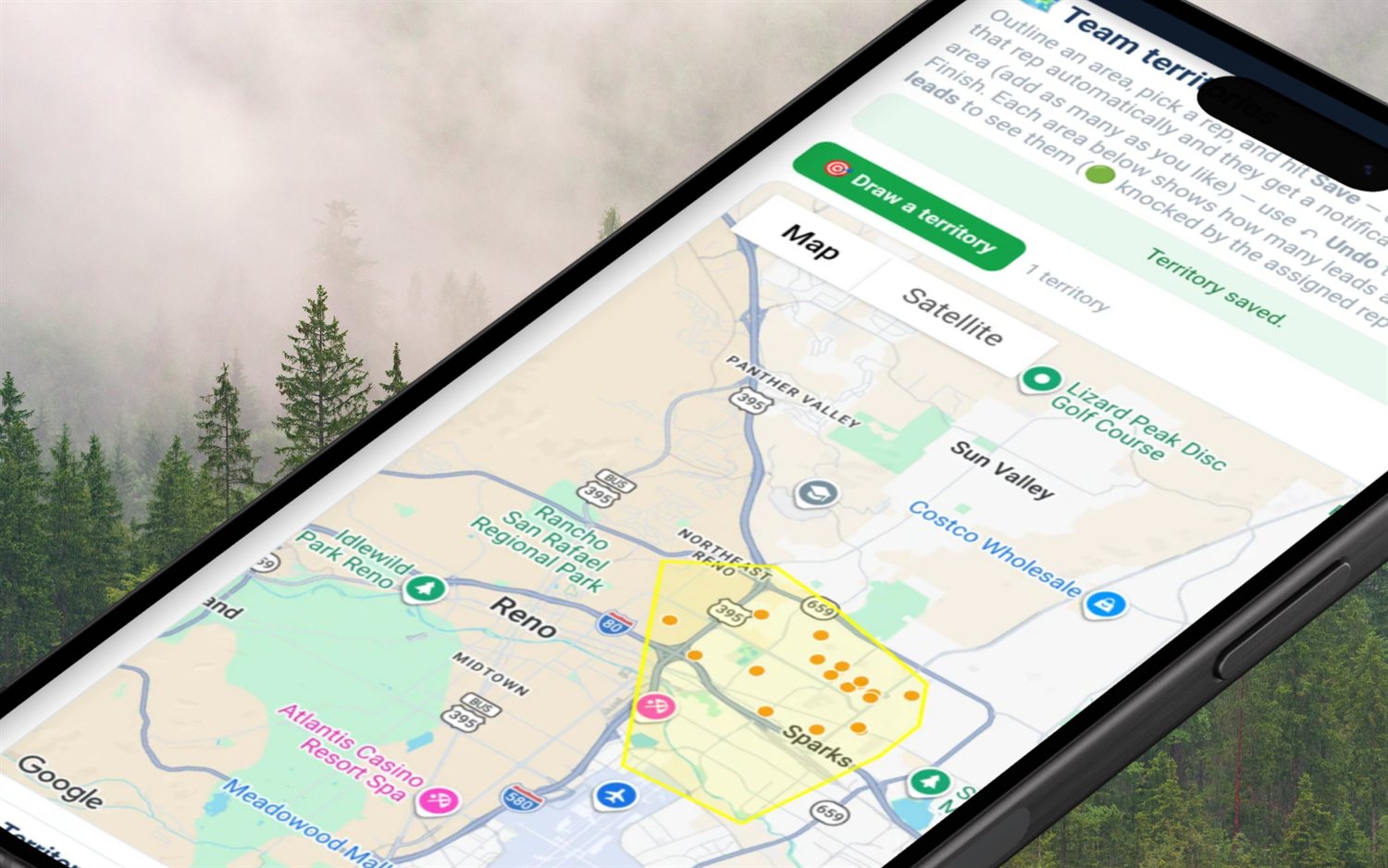
Draw an area on the map and one pull reveals up to 500 homeowners at once — the owner’s name, mailing address, whether they live there or it’s likely a rental, and their estimated age. Every plan with the owner reveal includes 50 pulls a month — that’s up to 25,000 homeowners of rich data every month. Run out and $10 adds another 50 (about 20¢ a pull).
Start a 14-day free trial — no credit card — and territory your first working street this week. Flat month-to-month, cancel anytime.